100mm Faders Change the Way You Perform
Why long-throw faders fundamentally change musical expression, automation precision, and the relationship between gesture and dynamics inside modern digital workflows.
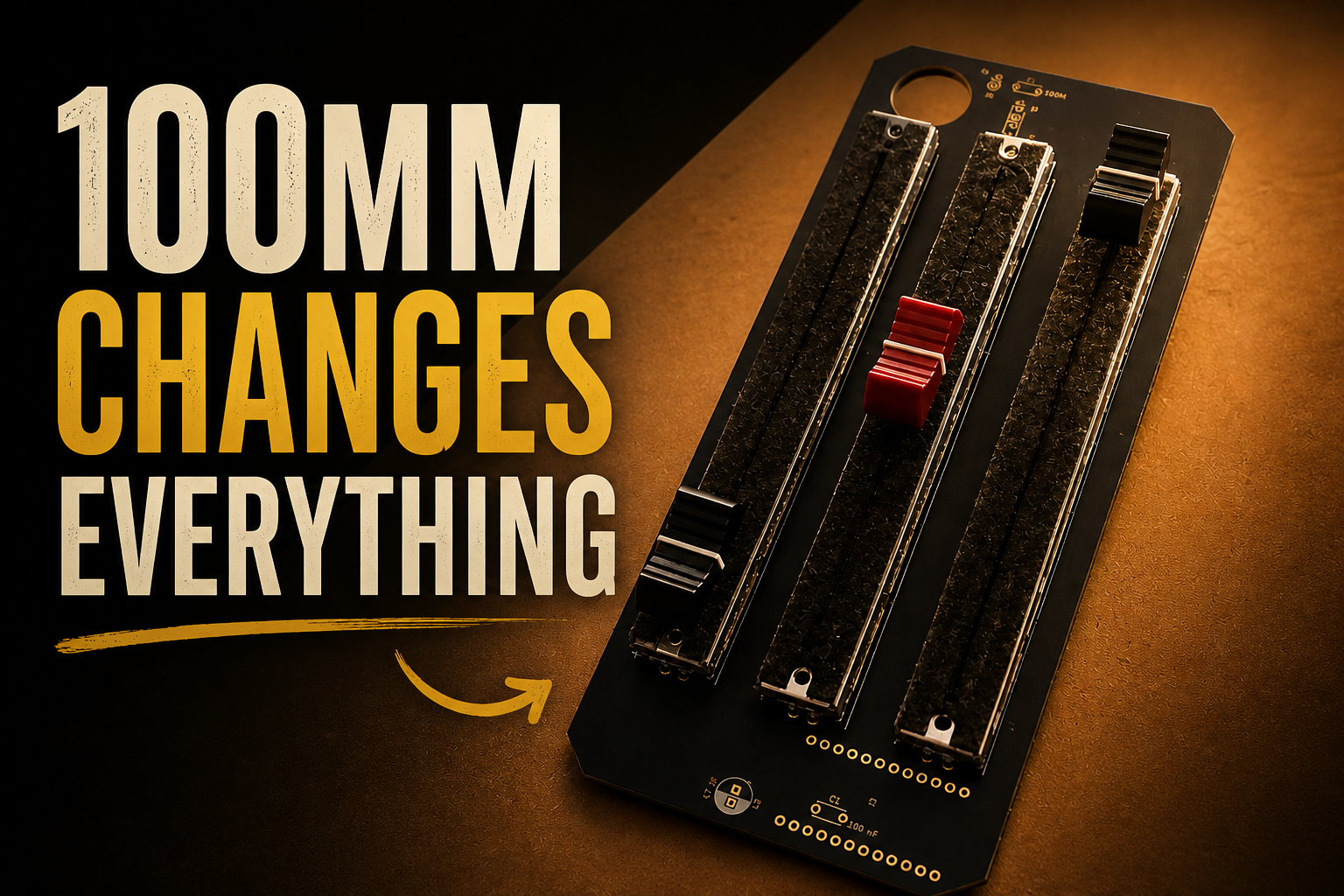
At first, the difference between a 65mm fader and a 100mm fader does not seem dramatic. It is only a few extra centimeters. But in practice, that additional travel changes the relationship between the hand, the gesture, and the music itself.
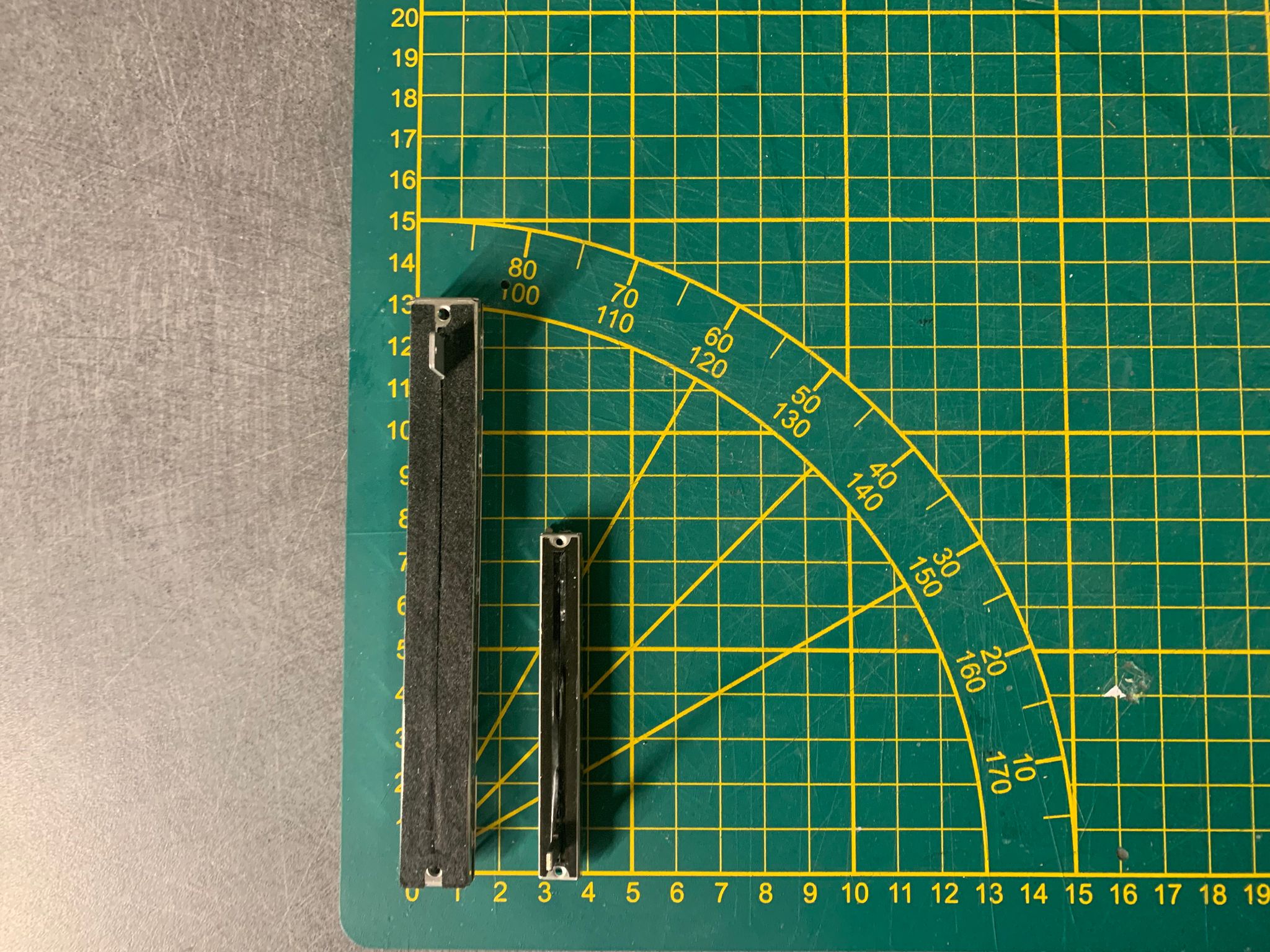
Before designing FAD3RS, I spent years working with high-quality 65mm fader controllers. They were responsive, reliable, and perfectly usable, yet I kept noticing the same thing in my performances: I would constantly end up too high in the range. Without even thinking about it, the hand naturally gravitates toward the top of the fader travel, leaving very little room for nuance or gradual evolution. And honestly, I think that tendency is completely natural. Reaching the top feels satisfying. There is a physical attraction to maximum intensity. The problem is that musically, constant intensity quickly becomes exhausting.
When a musician plays an acoustic instrument, he is rarely performing at full intensity all the time. And even when they do reach fortissimo, he cannot sustain it endlessly. It requires effort, pressure, breath, and energy. That limitation is not a weakness. It is precisely what creates dynamics. Without dynamic contrast, music slowly becomes flat, both for the listener and for the performer. The ear reacts to movement, restraint, tension, release, and gradual transformation. What feels obvious with acoustic instruments is equally true for synthesizers and sampled libraries.
A longer fader changes the way those dynamics are physically approached. With a 100mm throw, movements become more gradual, controlled, and nuanced. Instead of rapidly jumping between levels, the hand starts shaping transitions with far greater precision. This becomes especially important with modern sampled instruments, particularly inside Kontakt libraries using multiple dynamic layers.
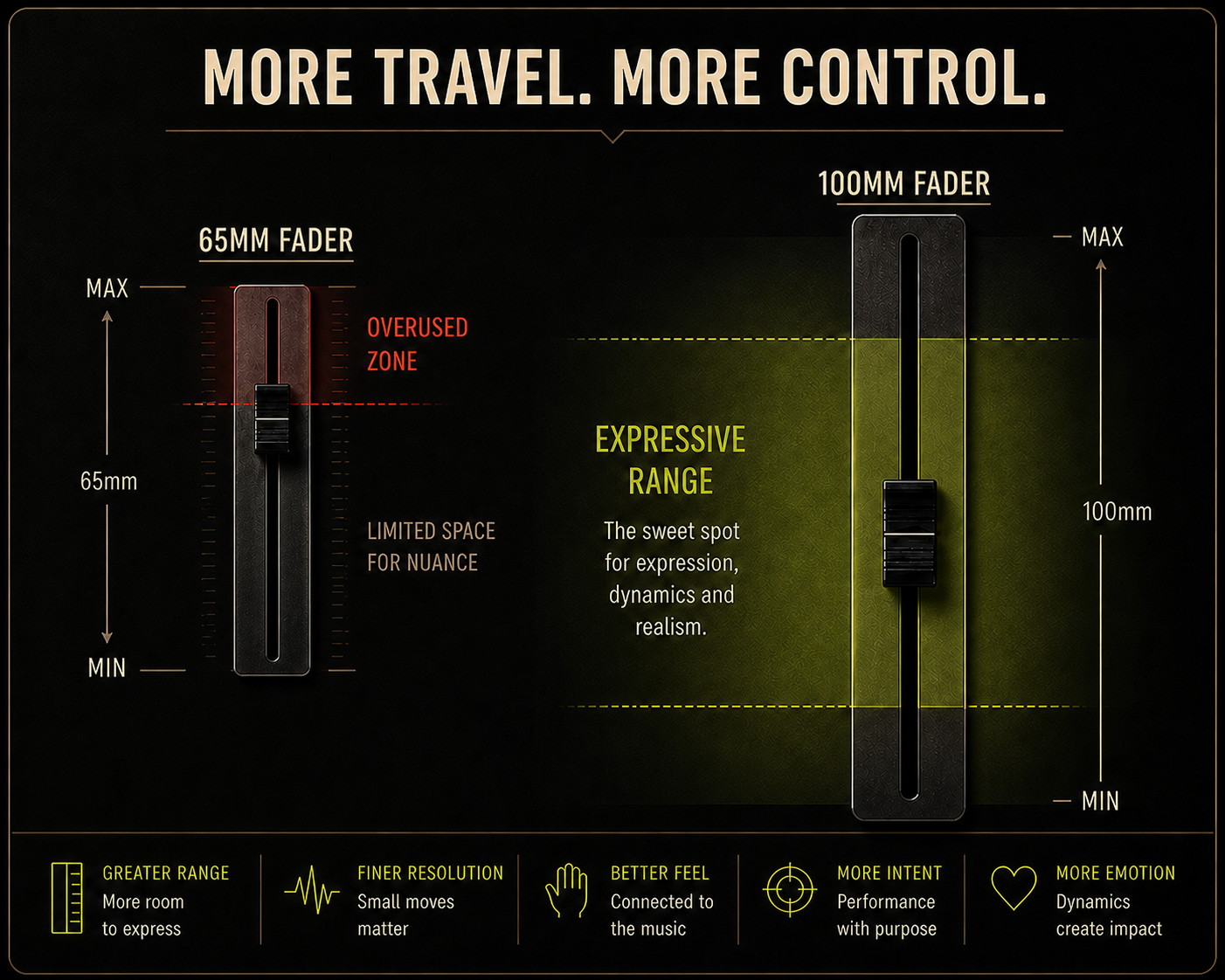
Those layers rarely affect volume alone. Timbre, harmonic complexity, bow pressure, breath intensity, vibrato behavior, and articulation all evolve across the dynamic range. But with shorter faders, many of those transitions become compressed into tiny movements that are difficult to control accurately. And interestingly, the most musical moments rarely happen at the extremes. For many orchestral libraries, the real realism often lives somewhere in the middle of the range. Moderate dynamic levels tend to feel more believable and emotionally complex than permanent ppp or fff extremes. Small variations in that zone can completely transform the perception of a phrase. A slight swell, a fragile release, or a tiny increase in tension can completely reshape the emotional weight of a line. Those details live in nuanced expression ranges, not in constant maximum intensity.
The 100mm format helps preserve access to those details because it creates physical space for expression. It also changes the psychology of performance itself. Reaching the top of a long fader requires actual intention. You do not arrive there accidentally as often. In many ways, it mirrors the effort required by real instrumental performance. Loudness should feel different physically. There should be resistance, distance, and commitment involved in the gesture.
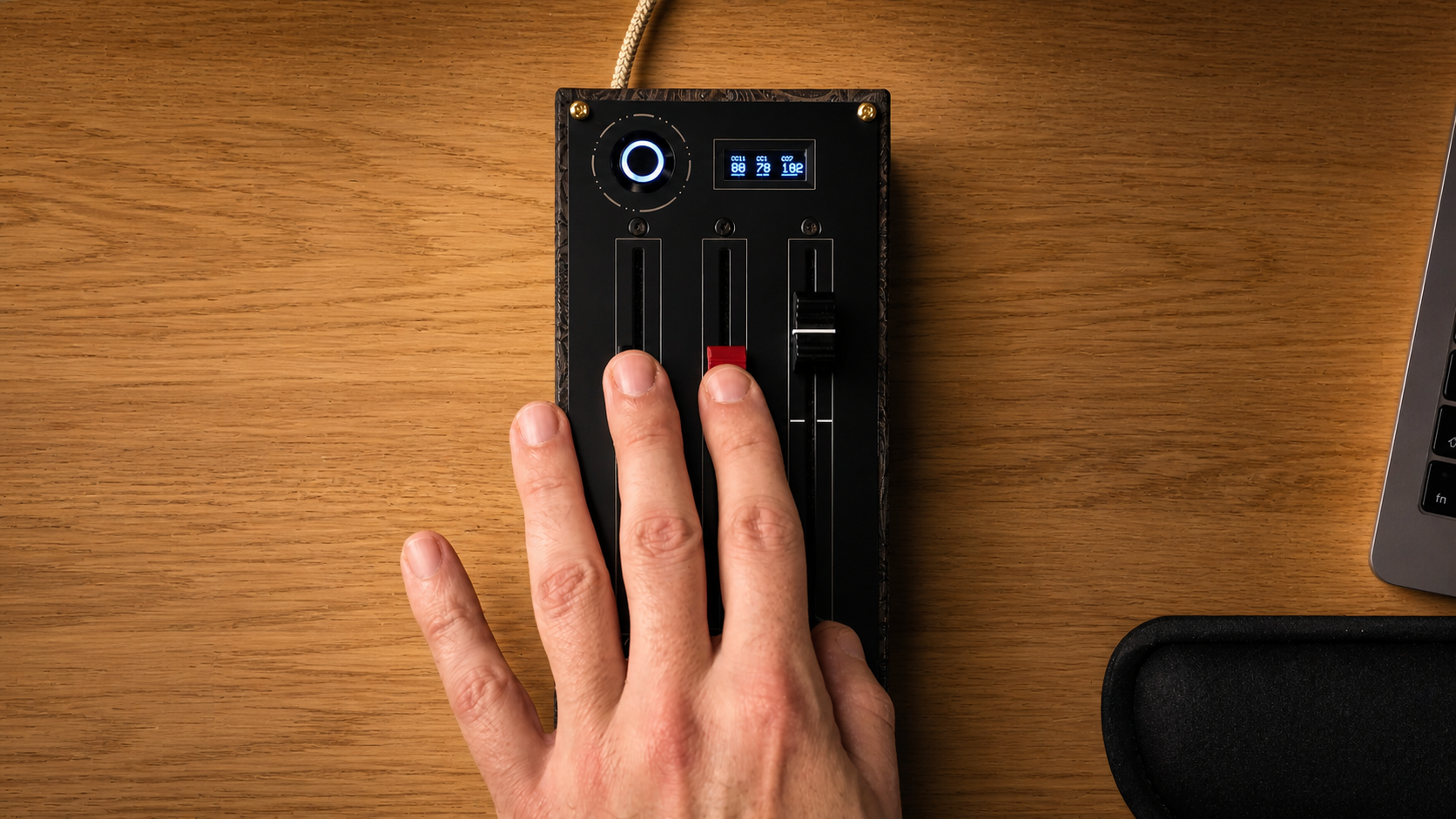
That relationship between movement and sound matters enormously. The choice of Alps faders became equally important during the development of FAD3RS. Their subtle resistance creates a level of precision that immediately changes the feel of automation. Faders that move too freely can feel strangely disconnected from the hand, almost slippery in their response. The slight resistance of the Alps design creates a movement that feels stable, deliberate, and musical, and ultimately that physical sensation directly affects the resulting performance.
This is why I believe dynamics are not simply something added after composition. The gesture itself becomes part of the musical process. The way the hand moves influences phrasing, timing, tension, and emotional contour. In many cases, the movement guides the music as much as the notes themselves. That is what FAD3RS was designed to preserve: not just control, but physical musical expression inside digital workflows.
Continue
Shop - FAD3RS